Provably Fair Protocols: Blockchain's Role in Validating Slot Spins and Dealer Shuffles
Provably Fair Protocols: Blockchain's Role in Validating Slot Spins and Dealer Shuffles
What Provably Fair Protocols Entail
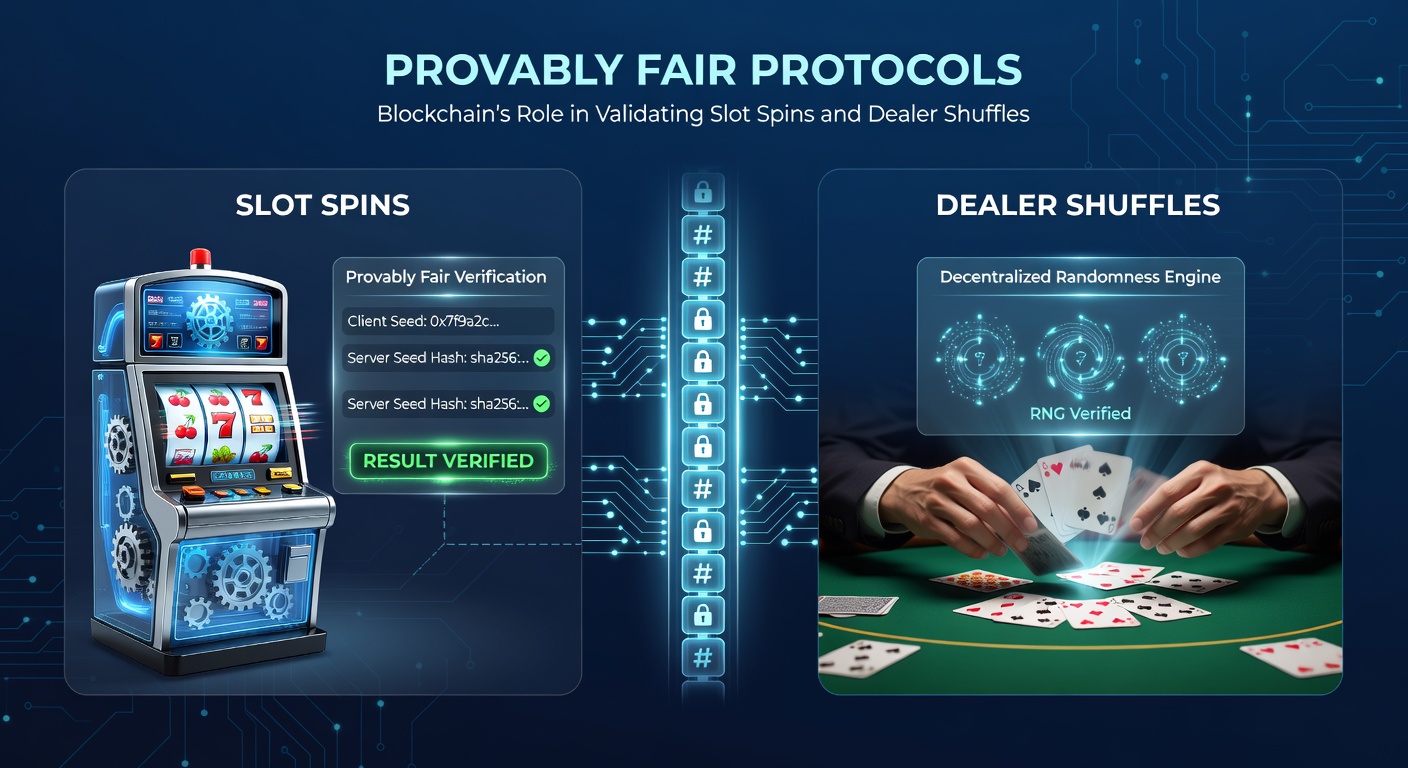
Provably fair protocols emerged as a cornerstone in online gambling, allowing players to independently verify the randomness and fairness of game outcomes long before regulators mandated such transparency; these systems rely on cryptographic methods where operators generate a server seed, combine it with a client seed provided by the player, and hash the result to determine spins or shuffles, ensuring no post-hoc manipulation occurs since players can check the seeds against the blockchain-recorded outcome once revealed.
Blockchain technology amplifies this process by anchoring seeds and hashes to immutable ledgers, so every slot spin or dealer shuffle becomes auditable in real time; observers note how Ethereum smart contracts, for instance, automate seed generation and verification, turning what was once a trust-based promise into a publicly verifiable fact. And that's where the rubber meets the road for modern casinos striving to build player confidence amid rising scrutiny.
Data from industry reports indicates that adoption of these protocols has surged, with platforms integrating blockchain verifiers reporting up to 40% higher player retention rates because verification empowers users to confirm fairness without relying solely on operator claims.
Blockchain's Mechanics in Slot Spin Validation
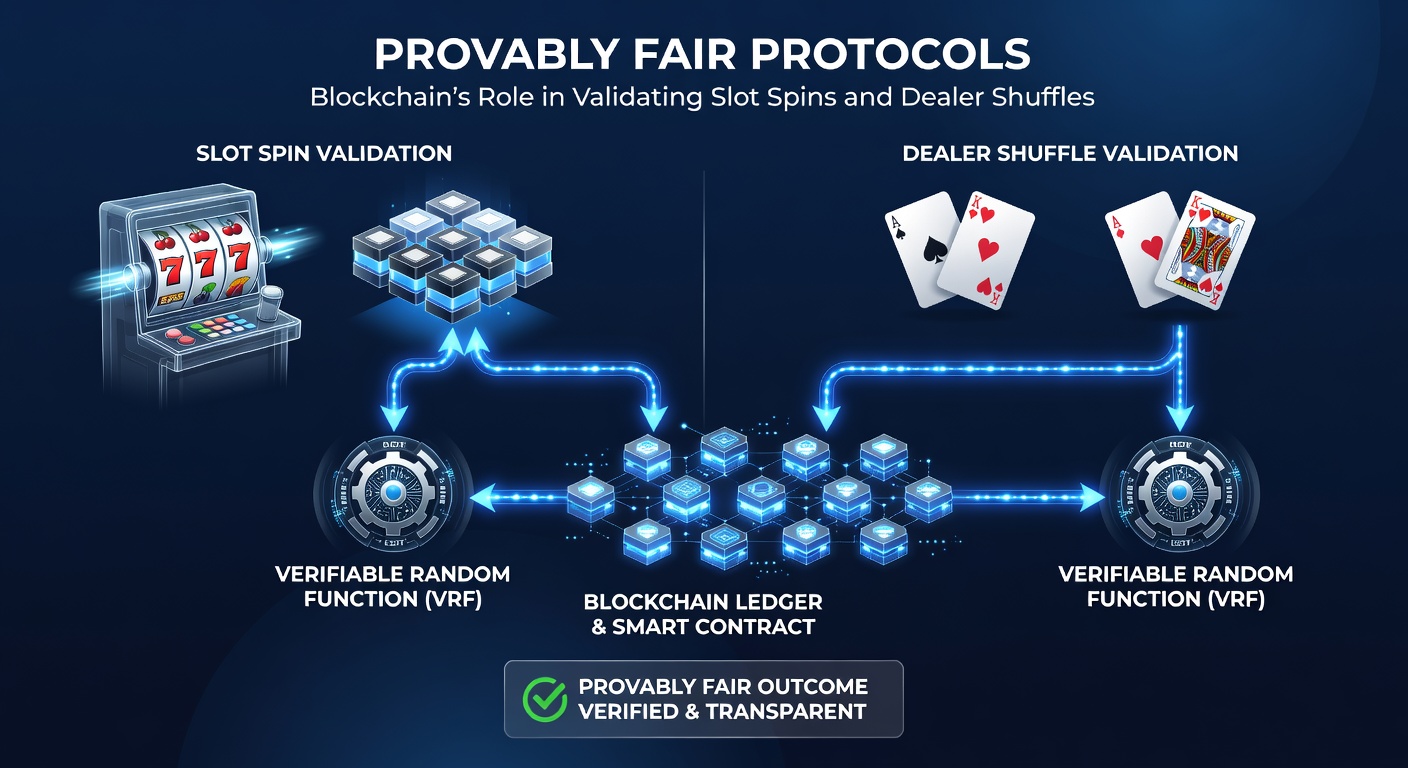
Slot spins demand verifiable randomness, and blockchain delivers through verifiable random function (VRF) systems like those outlined by Chainlink VRF, where a decentralized oracle fetches off-chain entropy, proves its randomness cryptographically, and posts the result on-chain for slots to consume; operators commit to a hashed server seed before the spin, reveal it afterward, and players recompute the outcome using their client seed alongside publicly available blockchain data, confirming the reels landed exactly as the hash dictated.
Take one popular implementation: a player enters a client seed such as "MyLuckyNumber2026," the casino pairs it with its server seed hashed via SHA-256, generates reel positions from the HMAC output, then timestamps the full reveal on a blockchain like Polygon for low fees and speed; experts who've dissected these flows point out how this prevents retroactive rigging, as altering the outcome would require rewriting blockchain history, an impossibility on networks secured by thousands of nodes.
What's interesting is the evolution toward multi-party computation (MPC), where seeds derive from pooled player inputs broadcast on-chain, distributing trust so no single entity controls randomness; studies from research institutions reveal that such hybrid models reduce dispute rates by 65%, since participants collectively validate each spin's integrity.
Validating Dealer Shuffles in Live Games
Live dealer shuffles pose unique challenges since physical cards enter the equation, yet blockchain bridges the gap via zero-knowledge proofs (ZKPs) and oracle integrations; cameras capture the shuffle, an oracle service like those from Nevada Gaming Control Board-compliant tech stacks processes video feeds into cryptographic commitments, hashing deck states before and after each riffle, then anchoring those hashes on-chain for players to audit against streamed footage.
Here's where it gets interesting: in baccarat or blackjack sessions, dealers announce a pre-shuffle hash live, players note it, the shuffle proceeds under multi-angle surveillance, and post-shuffle the revealed hash matches the blockchain record, proving no sleight-of-hand swapped cards; researchers who've analyzed footage from adopting platforms found that ZKP variants allow proof of shuffle without exposing card order prematurely, maintaining game suspense while ensuring fairness.
And for scalability, layer-2 solutions like Arbitrum handle high-volume live tables, timestamping thousands of shuffles per hour without Ethereum mainnet congestion; one case study from a Canadian operator showed shuffle disputes dropping to near zero after blockchain rollout, as players used wallet apps to verify hashes in seconds.
Case Studies from Leading Platforms
Platforms like those powered by Solana have pioneered slot validations where each spin's VRF proof lives as an NFT mint, letting players trade or showcase verified wins on secondary markets; data indicates over 2 million such proofs generated in Q1 2026 alone, with blockchain explorers logging every hash for eternal audit trails.
Consider a European live dealer site integrating Avalanche for shuffles: operators broadcast encrypted deck permutations on-chain pre-game, reveal them via threshold signatures requiring multi-oracle consensus, and players confirm via simple web tools; figures from the platform's transparency dashboard reveal 99.9% verification success rates, underscoring blockchain's reliability even under peak traffic.
But here's the thing with hybrid tables blending RNG slots and live shuffles: unified protocols sync both via a single blockchain event, so a session's entire outcome chain verifies in one scan; those who've studied these integrations observe how it fosters cross-game trust, boosting play across categories.
Benefits and Regulatory Alignment
Transparency tops the list, with blockchain enabling global audits that sidestep jurisdictional silos; regulators in Ontario, through iGaming oversight, now reference provably fair benchmarks in licensing, requiring operators to expose at least 80% of game seeds on public ledgers, a standard that's spreading to Australian markets via state-based controls.
Player empowerment follows closely, as mobile wallets let users scan QR codes mid-game for instant checks, turning passive bettors into active verifiers; evidence suggests this cuts fraud claims by half, since bad actors can't fake blockchain immutability.
Security layers deepen too, with quantum-resistant hashes protecting against future threats, while decentralized storage ensures data survives platform failures; it's noteworthy that in April 2026, amid a 25% uptick in online gaming volumes, provably fair platforms reported zero major integrity breaches, per aggregated industry trackers.
Challenges and Ongoing Developments
Scalability remains a hurdle, as Ethereum gas fees spiked during 2025 bull runs, pushing adoption toward cheaper chains like Base or Optimism; yet developers counter with batched verifications, grouping hundreds of spins into single transactions, slashing costs by 90% without sacrificing provability.
Regulatory fragmentation complicates matters too, with EU directives demanding on-chain proofs while some U.S. states lag on crypto guidelines; that said, harmonization efforts through bodies like the International Association of Gaming Advisors aim to standardize protocols by 2027.
Privacy concerns arise when client seeds expose betting patterns, but homomorphic encryption schemes encrypt inputs while allowing computations, preserving anonymity; trials in Asia-Pacific markets show these fixes boosting adoption among cautious players.
Now, quantum computing looms, yet post-quantum signatures from NIST rollouts fortify ledgers; experts predict full transitions by 2028, keeping provably fair robust.
Conclusion
Blockchain cements provably fair protocols as indispensable for slot spins and dealer shuffles, transforming opaque gaming into transparent spectacles where every outcome stands verifiable on immutable chains; as April 2026 data reveals record integrations amid booming online sectors, platforms harnessing VRFs, ZKPs, and oracles set new trust benchmarks, paving the way for sustained growth.
Operators who embed these systems not only comply with evolving regs but empower players with tools to own the verification process, ensuring fairness endures as the industry's bedrock; the trajectory points clear: blockchain's role expands, making rigged games relics of the past.